
Describe the work you will actually perform
List workshop services, supporting tasks, storage and fixed equipment you intend to operate. Identify welding, painting or special materials if they are part of the work, without assuming every workshop needs identical equipment. Operational information supports technical review and activity identification; it neither authorises a process nor replaces its applicable requirements.
Map the premises by function
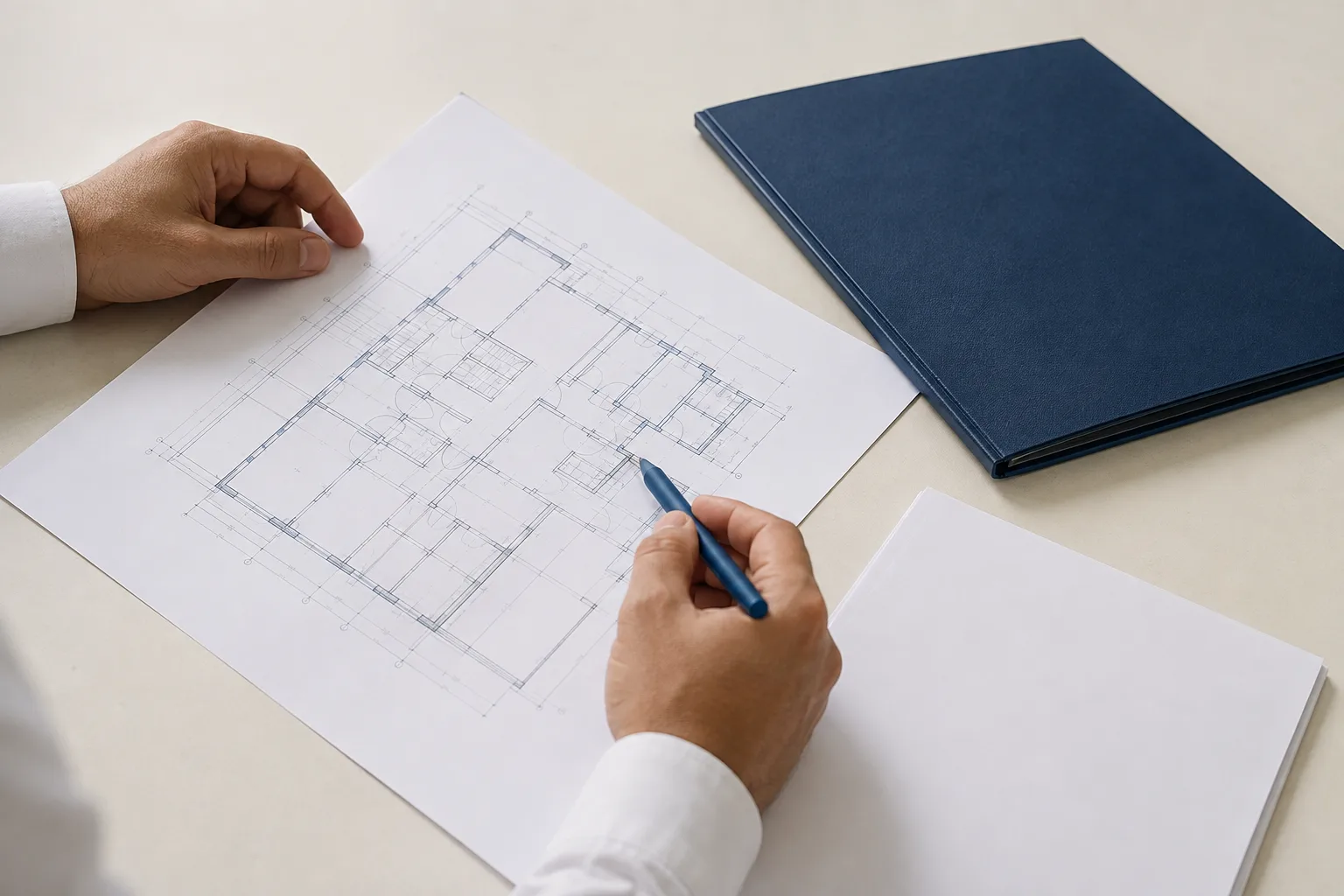
Provide a plan or organisational sketch showing access, work zones, storage, services and any customer area. Distinguish existing arrangements from unbuilt proposals. This initial sketch supports discussion but is not an approved dimensional or safety design. The specialist reviews layout implications for design and execution, especially if equipment positions change during the fit-out.
Identify work requiring owner coordination
Establish who supplies building information and approves work affecting shared elements or existing equipment. Record responsibilities for electrical services, routes and related finishes, including exclusions from the safety quotation. Do not let execution rely on assumed owner consent. Clear boundaries reduce coordination conflicts and allow scope changes to be reviewed before costs are incurred.
Ask for a comparable execution schedule
The agreed schedule should state work, equipment, quantities, specifications, installation accessories and testing coverage. List plans, reports or the relevant certificate separately where required. You can then compare equivalent scopes and understand whether a price difference concerns the product, connection work, execution records or follow-up service.
Accept systems together with their records
Agree handover attendance, how relevant test results will be shown and how unresolved items are recorded. Retain the equipment list, quoted documents and included operating explanation. Receiving supply invoices alone is not acceptance of completed installation; you should be able to identify what was installed, who reviewed it and what needs later follow-up.
Start licensing with the correct activity description
Balady provides activity-related requirements, while the case determines applicable requirements and approvals. Send Client First your Hafr Al Batin workshop description, fit-out stage and available files. We define plan review, safety equipment and system installation, the appropriate report or certificate and municipal and Civil Defense follow-up, clarifying deliverables and exclusions before execution is agreed.
Questions to help you get started
Should I buy safety equipment before the workshop review?
Define scope and specifications first. A generic shopping list can miss connection work or equipment and may not match the activity and premises.
Does this guide cover every workshop type?
It explains project organisation, not universal workshop requirements. Processes, materials, layout and location need specialist and authority review for each case.
Can setup and follow-up be requested together?
Yes. State that you need full coordination. The quotation separates plans, execution, documents and follow-up so each stage has a clear scope.
You may also find these useful
- Business setup and licensing coordination
- Safety-system and equipment installation
- Specify required safety equipment
- Request a Hafr Al Batin workshop review
Guide sources
- Balady: commercial licence requirements
- Saudi Fire Protection Code SBC 801: 2024 contents
- Civil Defense: Salamah service
Current requirements for each activity are checked with the relevant authority when the application is made.